hhHiya! We have now had some replies to our casting call online on Star Now! Here are some pictures of the people who have applied for the role:
The people that you can see in the images above our shortlisted applicants, meaning that they are our favourite choices. Overall we as a group have decided that Chloe Carroll is our favourite choice for the girl in our music video and Cosmo Bailey-Kay is our favourite choice for the boy. When she applied, Chloe also sent a message with her application which you can see just below and seemed especially keen and she also has a lot of experience in the performing arts.
We are now in the process of arranging times with them to do an audition for us to interview them over Skype so we can ask them questions about their availability for in the coming month (October 2017) and also about their experience in the performing arts. These interviews will take place on the 3rd of October, next week on Tuesday so come back then to find out how they went!
Hello and welcome back to another research and planning post! In this post I will be discussing my research into digipaks and their forms and conventions. Enjoy!
What is a Digipak? A digipak is an alternative to CD jewel cases (rigid packaging for CDs, DVDs and other types of optical media), and is a categorised as a style of optical disc packaging. Digipaks consist of a printed card packaging which is able to hold one or more CDs, that are held in place by separate plastic trays which are glued into the digipak.
Below you can see a typical layout for how a digipak is presented:
Forms and conventions of Digipaks:
The front and back panels are the main 'promoters' of the CD and are heavily used to draw in customers, persuading them to buy the CD.
The inside of the digipak is used to store information and extra things to do with the artist/song/album including pictures of or relating to the artist and lyrics to the songs on the CD.
The folds of the digipak fold around the plastic case which secures the CD in place and makes sure that it is not damaged or lost.
On the front of the digipak, the name of the artist and their album/song can be found and there will usually be a large, eye-catching picture on this part of the digipak, in order to entice more people to buy the CD.
On the back panel of the digipak you will find a list of the songs by the artist/of the artist's album, the record label of the company who the artist is signed to, a barcode to buy the CD and also any extra information to do with the artist.
In the inside of the digipak you will find the plastic holder for the actual CD itself. Often today, these plastic holders are made to be transparent which enables more album artwork to then be created behind this plastic holder, making the digipak stand out more and attract more customers. Inside you can also find extra information concerning the artist/album/song, such as extra album artwork, song lyrics and personal messages.
Digipak Example:
Above you can see a picture of a digipak created for the band Alt J's single 'Matilda'. This CD is selling as an EP meaning that it has different versions of the one single plus other extra tracks. Alt J are an English indie rock band and this is what the digipak here is trying to advertise. The front panel shows the name of the band and just underneath this is the title of their single. This panel has a black background but the words seem to have been placed on top another picture, making them appear fiery and mysterious, hinting at the band's indie style of music. Then at the top of the digipak, the middle panel and top right panel show pictures of outer space and stars, giving a sense that this artist and their music is quite literally 'out of this world'. This theme of outer space conveys the genre of the artist across to the consumer because this theme connotes a sense that this music and the artist is much more different to any thing else, again suggesting the genre of indie music.
What this tells me is that when creating my own digipak within my group for our artist, we need to make it represent what the artist is about and what genre their music falls into. This will make it clearer for our target audience on what our song is actually about and thus entice them more into buying it. As well as this, for the front panel of our digipak we will need to ensure that we have a strongly eye-catching image that will attract people to buy the CD and this will also need to be the case for the back panel too, because these are the two most important panels of the digipak since they are the ones that people see the most.
Hey! Welcome back to another research and planning post! Today me and my group created a casting list online on a website called Star Now and are now looking for actors to star in our music video. This website is used for companies looking for actors, models, musicians, dancers, etc. and is also used by actors, etc. themselves who are looking for roles. By using this website, we are hoping to find industry-level talent and to find actors with professional qualifications which will enhance the quality of our music video. Below you can see a picture of of our casting call, summarising the roles we need and what our music video is about:
From this you can see how we have told our potential applicants that we are not able to pay them for their roles but that we will do a free photoshoot for them in a location of their choice and will also cover catering costs during filming days. This is because as we are students and this is a student project, we have very little money to spend and are on a tight budget for our music video meaning that we will be limited in some ways for what we are able to include in our music video. For example, in terms of outfits for our characters, we are going to use a combination of our own clothes and the clothes of our actors (as long as they consent to this). During our meeting today, we started by discussing ideas for what to include in our casting call and what requirements we need for our characters of the girl and boy. Below you can see some pictures of the requirements of actors for our music video:
Now we have made our casting list public and it is now being advertised, we just have to sit back and wait for some replies! Come back again soon to find out about our potential actors for our music video!
Hi there! Welcome back to my blog! Today me and my group got together to begin planning our music video more thoroughly in terms of what shot types we want for different parts of the song and what will be in them.
So the day before we all listened to the song individually and began brainstorming our own ideas for different shots to be in our music video. Below you can see a picture of some of the ideas that I cam up with for the beginning of our music video:
All members of my group completed this task and in our lesson today we came together and discussed all of our ideas. For example, Lesley suggested for our opening shot we could have a wide shot of the boy sitting in his bedroom with the virtual reality (VR) headset already on, and then the camera quickly zooms into the headset, into an entirely different shot which is symbolic of how the boy is now in a completely different world. We are thinking that it will look something like the beginning of the music video for 'I Got You' by Duke Dumont which you can watch below:
The concept of this music video is also rather similar to our idea for our music video, potentially providing inspiration for us and our plans.
In this meeting today, we also came up with an outline of the narrative of our music video which is:
1) In the first verse we will have a variety of shots of the couple driving in a car, cuddling and holding hands with each other as well as some performance shots at the beginning.
2) During the first chorus the couple will rob a shop and steal some of their products but mainly just their money.
3) This will be the second verse and during this the couple will break into a house and steal things.
4) In this part of the music video the second chorus will begin and we will have many different performance shots of the artist singing on a rooftop and make it fast-paced to match the pace of the song's chorus.
For the end of our music video we are not entirely sure what we are going to do yet but we have made a vague plan to have a group of gangsters catch the couple and then the boy will 'die' in the game and the screen will say 'GAME OVER'. Then the camera will cut to a shot showing the boy in his bedroom simply taking off the VR headset, revealing that it was all just a game.
So there we have some updated plans on what we are planning for our music video. I hope you found it interesting and hope to see you again soon!
Hiya! Welcome to another research and planning post! This time I will be researching the role that the internet plays in the distribution and marketing of music and artists. Enjoy!
Digital Distribution: Digital distribution is the delivery or distribution of types of media content, including audio, video games, video and software. This term is generally used to describe the distribution that takes place over an online delivery medium, most commonly the internet. Media content that is distributed online can be downloaded or streamed onto a digital device and typically consists of films, television programmes, books, music, video games and software.
Examples of digital distribution: Digital distribution of music can be found on websites and applications such as...
Spotify: website that allows users to stream music online.
iTunes: app where you can download music for a fixed price.
SoundCloud: website that enables users to record, upload and share their own sounds that they have produced.
Vimeo: website on which users can upload, share and watch videos.
YouTube: website on which users can upload, share and watch videos as well as like or dislike them, rate them, comment on them, etc.
All of these sites and applications allow people to discover new music constantly and to listen to their favourite music artists very easily as they can simply just stream the music they want online, usually for free.
Digital Marketing: Digital marketing is a term used for the marketing of products/services using digital technologies, primarily through the internet. This type of marketing started to become prominent in the 1990s and has become one of the most popular forms of marketing through the 2000s to today. As more and more people use a variety of media platforms today, meaning that they just use digital devices and services without physically visiting shops, digital marketing schemes are becoming more and more popular and efficient.
Where can you find digital marketing?
Smartphones and mobile devices, such as laptops, iPads, tablets, etc.: having a mobile device with you means that you can access new music and new artists all the time. Apps like Spotify allow you to stream music and to discover new artists that you have never heard of before, showing how these apps are essentially a form of advertising within themselves.
Video advertising: websites such as YouTube and Vimeo allow anyone to create a video and to upload it to the site for free for millions of people across the world to watch. If someone becomes very popular on a site like these it can easily kickstart their career as a music artist.
Social media: social media is one of the most common if not the most common forms of online marketing, particularly for music artists. Artists will use social media to connect with their fans, running live videos on websites like Facebook and live Q&A sessions on Twitter. By essentially talking to their fans on social media, their fans feel connected to them and come to love them even more. Social media is also used by artists' mangers to build a hype around the artist, particularly when they are just about to release a new single or album or announce a new tour. This can create a huge online buzz around the artist which can reach anyone in the world who is connected to social media. This can also mean that social media enables people to discover new artists, making fan-bases larger and stronger, gaining more and more support for the artist.
Example of an artist who use digital distribution and digital marketing:
The Vamps
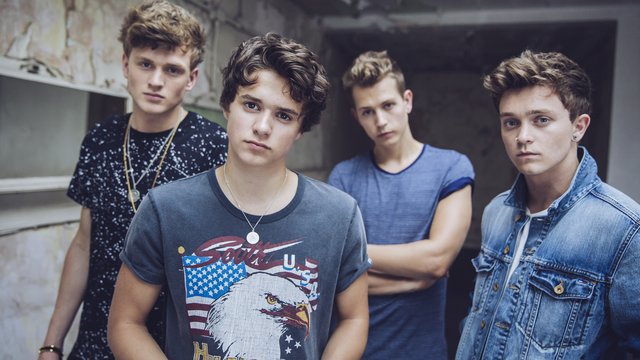
The Vamps are a British pop/rock band who formed in 2011. When they first began making music together, they uploaded videos to YouTube in which they sang covers of other songs. It was in late 2012 that they first gained fame when they were signed to Mercury Records and toured with One Direction and McFly. In August 2013 they released the single 'Can We dance' which received over 1 million views on YouTube in 2 weeks and by April 2014 they had released their debut album. They have now released two more albums, have had 5 tours in the UK, the U.S, including one world tour and another upcoming world tour this year in 2017. Over the years they have collected a huge worldwide fan base, and as of September 2017, they have 3.89 million followers on their Twitter account.
They are an example of just how prominent digital distribution as well as digital marketing is in the music industry today. They achieved global fame through digital distribution (originally by posting videos on YouTube) and ever since have been promoted and advertised through digital marketing. This includes The Vamps' website and their Twitter, Facebook, Instagram, YouTube and Google Plus profiles.
What I have learnt from this task is just how prominent the online world is in the music industry today. Both digital distribution and digital marketing are key in the music industry. With the internet artists are able to upload songs to various different websites and applications for free, available for millions of people across the world to see. This then allows professionals in the music industry to spot new talent which can see an unknown artist become internationally famous. When their career starts they are then marketed through online methods, including video advertising on different media platforms, such as YouTube, social media, and direct online advertising to digital devices, particularly smartphones.
Hello and welcome back to my research and planning blog! How has the internet affected the music industry? According to the IFPI's (the International Federation of the Phonographic Industry) 2016 Global Music Report, digital music sales contribute 50% of industry revenues whilst physical sales only represent 34% of industry revenues. However, prior to the 21st century, people would buy music rather than stream or download it online because the internet, or to be specific the World Wide Web, was not invented until 1989. People would go to record shops to buy CDs or vinyl records, unlike nowadays when people can stream music directly from the internet at home for free.
Diagram representing the change in how people now access music.
It was at the dawn of the twenty-first century that saw the rise of digital technologies which have has such a huge impact on the music industry. For example, worldwide sales of CDs, vinyl, cassettes and even digital downloads fell from $36.9 billion in 2000 to $15.9 billion in 2010, according to IFPI. The 2000s saw such a change in the music industry that artists now rely on live performances and selling merchandise (e.g. T-shirts, sweatshirts, accessories such as wristbands, scarves and hats, etc.) for the majority of their income, whilst only making a handful of pennies selling their CDs and records. Thus, as a result of this, music artists have also become very dependent upon music promoters, such as Live Nation which is American global entertainment company that dominates tour promotion and owns many music venues. However, whilst this dependency on music promotion companies can be seen as a positive, as it enables music promoters to continue their businesses, this change in technology has badly affected record and CD shops all over the world. Because many people now stream or download their music online, sometimes illegally, and because they do not usually have to pay to listen to the music they want, this has led to a rapid decline in the number of record/CD shops on our high streets. Prior to the 2000s and the rise of the internet, people were only able to listen to music by purchasing records or CDs from independent record shops, or by listening to the radio and watching TV (take the TV show Top of the Pops for example, which ran from 1964-2006); but the majority of people would buy their music from record shops. However, this is no longer the case due to the internet and the vast majority of independent record shops have now closed down. Even large retail record stores have gone into decline, for instance HMV which is a large entertainment company that sells vinyl records and CDs, as well as video games, films, etc. which has been operating since 1921, was taken over by lawful administration in 2013. A few months later it was brought out of administration but fewer stores exist today than in the twentieth century, with all HMV Ireland stores closing in the same year. The fact that these much larger record stores have been forced to close down several of their stores shows some of the extent of the impact that the internet has had on the music industry, as well as showing why so many independent record shops have had to close. Music Downloads and Streaming Online: Nowadays, people are able to access music online by either or by both downloading the music they want or streaming it. By downloading music, you have a permanent copy of the song(s) or album(s) you have chosen, meaning that you can play it as many times as you want to. With the invention of the World Wide Web in 1989, more and more people began to use the internet from the mid-1990s into the 2000s, and from then onwards music began to move online. With companies beginning to recognise this shift in how people accessed music, they began to change how they operated themselves, in order to match this change in technology.
iTunes was created in 2001 by the American multinational technology company Apple. iTunes is an application used to play and download digital downloads of music and video, as well as other media content including podcasts, audiobooks, etc. On iTunes, users purchase whichever song, album, etc. they want for a fixed price and it then downloads onto their digital device, e.g. an iPod Touch or an iPhone. When it was first introduced it proved to be popular with music fans because they were now able to buy just one song rather than having to buy the whole album. Yet this again did not have a wholly positive impact on music artists because they were now receiving less profits for their work. Whilst iTunes still provided the downloads of music for a certain amount of money, it could be argued that its creation marked the beginning of the decline of music sales in the industry.
This is because today people are not willing to buy music when they can simply listen to it for free. Consequently, today very few people use iTunes and artists , in similarity to the sales of physical music, like CDs, will make just a few pennies from iTunes downloads. However, the online American company Amazon has employed similar strategies to iTunes and customers are able to buy digital copies of albums from their favourite artists. As well as this, the company has created a new platform specifically for music streaming services called Amazon Music. Amazon Music is an online music store, music streaming platform and music locker operated by Amazon. Whilst it enables its customers to buy physical copies of music, e.g. CDs and vinyl records, it also sells digital downloads of music and provides a music streaming service, demonstrating how it caters for a wide range of different audiences- from those who prefer physical copies of music to those who would rather stream their music online. On the topic of streaming, Spotify has become one of the world's most popular music streaming services since its launch in 2008. Spotify is a music, video and podcast streaming service that provides a freemium service for its users. This service includes basic features with advertisements and limitations. However, there is also a premium service offered through a paid subscription which provides additional features and a higher streaming quality. Spotify is also available on the majority
of technology devices including smartphones, tablets and Windows and macOS computers, making it accessible to a huge range of audiences across the globe. In June 2017, Spotify was reported to have over 140 million monthly active users and more than 60 million paying subscribers in July 2017. From these statistics you can see the extent of Spotify's popularity with its audiences and just how many people stream their music via an online application rather than buy physical copies or pay to download it. Yet in spite of this, Spotify alongside the music streaming industry in general has faced criticism from artists claiming that they have not been fairly compensated for their work as music sales decrease further and music streaming rises. With physical music sales or download sales, customers pay a fixed price for each song or album that they purchase, but with Spotify, they pay artists based on their 'market share' which is the number of streams that they receive for their songs as a proportion of the total songs that they stream on the service as a whole. Spotify distributes around 70% to rights-holders who then pay artists based on their individual agreements or contracts. It has been reported that on average, Spotify pays $0.006 to $0.008 per stream to an artist. Once more this shows that although audiences today much prefer to stream their music online, usually for free, the services they use to do this barely benefit the artists that they listen to, making hardly pennies for their music sales in the form of online streaming. On the other hand, some companies such as Kickstarter are trying to encourage and support independent music artists to produce music through fans/audiences funding the artists that they want to listen to. Kickstarter is an American corporation which maintains a global crowdfunding platform that is focused on creativity. It has received over $1.9 billion in pledges from 9.4 million people to fund thousands of creative projects, including films, music and video games. This model is related to the subscription model of arts patronage where artists would go directly to their fans and audiences to fund their work. Because of this, many new and upcoming music artists no longer see a record deal as a vital part of their business plan or career. Recording hardware and software can be purchased by independent artists themselves at a cheap price and enables them to record music simply on a laptop in their bedroom or at home and then distribute it to a worldwide audience over the internet. Yet although this is good news for artists, this has caused problems for recording studios and their producers, as well as record labels because now artists can be completely independent, there is not necessarily a need for these companies. But then this has benefited another part of the music industry at the same time because companies selling music recording hardware and/or software such as Apple have significantly increased their profits due to more and more people now buying these products.
SO...in conclusion:
Music artists today rely on live performances and selling merchandise to make money.
Artists make very little money from music sales, both physical sales of music, e.g. CDs and vinyl records, and online downloads.
Online streaming of music is the most common way that people listen to music and often they do not have to pay for this service.
This has caused many record shops selling vinyl records and CDs on high streets to close down, both independent and large corporations.
Some companies, like Kickstarter are trying to help independent artists make a living and a career by getting fans to fund the artists they like.
Independent artists have begun to buy their own cheap recording hardware and software and to produce and distribute their own music at home.
This has meant that record studios, record producers and record labels have started to go into decline.
Overall, the internet in one way has made it easier for artists to distribute their music but has also meant that they are paid much less for it.
I hope you found my research interesting and hope to see you again soon!
Hi there! Today I will be talking about the research I have done into record labels and companies and how they operate. Enjoy!
Researching Record Labels and Companies: A record label or company is defined as a trademark or brand that is associated with the marketing of music and music videos. Sometimes a record company is also responsible for:
Publishing and managing the brands and trademarks of an artist.
The production, distribution, marketing and enforcement of copyright for music recordings as well as music videos.
Finding new talent in the music industry and developing these new artists.
Maintaining contracts with artists and also their managers.
In similarity to Hollywood's 'Big Six', the music industry also has its own collection of major music companies. Today, there are only three record labels that can be referred to as 'major' labels or companies:
Sony Music Entertainment
Universal Music Group
Warner Music Group
Sony Music Entertainment is a subsidiary of Sony, a Japanese multinational corporation. Sony Music Entertainment itself is an American company and in the UK, they own a wide range of record labels including Columbia, Black Butter, Red Essential and RCA. It has recorded many internationally famous artists such as the Foo Fighters, Michael Jackson, Britney Spears, One Direction, George Ezra and First Aid Kit, demonstrating how their artist rosta varies from the pop genre to rock music to acoustic music.
Universal Music Group (UMG)is a global American music company which is owned by Vivendi, a French multinational mass media conglomerate. It is home to some of the world's most iconic record labels and companies including Island Records, Virgin EMI Records, Abbey Road Studios and Polydor, and has recorded many artists such as Nirvana, Lorde, ABBA, Katy Perry and The Beatles. Here we have a range of artists who produce very different genres from one another- from mainstream pop to grunge rock, developing a diverse artist rosta for the company. As well as this, UMG owns and operates a wide range of businesses focused on recorded music, merchandising, and publishing content in over 60 countries.
Warner Music Group (WMG) is the only American music conglomerate in the world and is a multinational entertainment and record label company headquartered in New York City. It owns and operates some of the largest and most successful record labels across the globe including Warner Bros. Records, Atlantic Records and Parlophone as well as some of the world's most renowned artists, for instance Ed Sheeran, Madonna and Coldplay.
Independent Record Labels/Companies:
An independent record label is a record label/company which operates on its own without any funding from major or outside record labels. Many musicians begin their career with these types of labels and then later go onto record with more major labels, such as the ones above.
The definitions of a 'major' record label and an 'independent' record label differ from one another at times. A 'major' record label is defined as one that owns its own distribution channel, whilst an independent record label does not. However, some independent record labels decide to sign dual-release agreements (as well as make other deals) with major labels, causing independent labels to come to rely on distribution agreements, licensing agreements as well as other arrangements with major labels. These major labels can also come to wholly or partially own independent labels.
Some of the most well-known independent labels include:
Vertical and Horizontal Integration:
Vertically integrated companies are companies which own every part of their business; they own all of the different stages of producing their product, e.g. the distribution, production, and marketing. These companies tend to be large companies, commonly referred to as 'major' companies. On the other hand, horizontally integrated companies tend to be much smaller, more niche independent companies who cannot afford to own every part of their production process. Therefore, as a result of this they use other small companies to help produce, distribute and/or market their product.
In the music industry, it is the major record labels, including Sony Music Entertainment and Universal Music Group, that are vertically integrated, whilst independent record labels, such as Rough Trade Records, are horizontally integrated. For example:
Sony Music Entertainment: this is one of the three major record labels and is a vertically integrated company. They own several individual record labels including:
Epic Records
Columbia Records
RCA Records
However, as well as owning separate record labels, Sony Music Entertainment also owns other Sony subsidiaries, even being a subsidiary of Sony themselves. Sony companies that Sony Music Entertainment own include:
Sony Music Nashville- the country music branch of Sony Music.
Sony Masterworks- the classical music branch of Sony Music.
Sony Music Latin- the Latin music branch of Sony Music.
Sony Music Entertainment Korea- the division of Sony Music that distributes its music to Korea.
Sony Music Entertainment Australia- a company that records Australian artists and distributes their recordings.
There is also Sony Music Italy, Sony Music Germany, Sony Music Hong Kong, Sony Music Indonesia, Sony Music Argentina, Sony Music Poland and Sony Music Finland.
From this, what we can see is just how broad and wide-ranging this record company is. The amount of companies that they own shows us some of the extent of the size of Sony Music Entertainment, as well as the conglomerate Sony itself. They have subsidiaries all over the world who record and distribute national artists and also distribute artists' recordings internationally.
However, this is different for independent companies:
4AD: this is an independent record label that was founded in 1980, during which it became well-known for its alternative rock artists. It is a rather niche company which focuses particularly on the alternative rock genre but also for its dream pop and gothic rock music. Whilst 4AD, unlike Sony Music Entertainment, is not owned by another company, it does form part of the Beggars Group which is record label that distributes other record labels, 4AD for instance. This is an example of horizontal integration which is very common to independent companies and shows how their production, etc. processes are different to those of major record labels who are vertically integrated. What I have learnt from researching these record labels is the difference between the major record labels (the 'three major' record labels) and smaller, independent record labels. Major labels are able to own a large range of subsidiaries and also sign artists from all different genres, whereas independent record labels tend to be more niche. Because they are much smaller in size and have smaller budgets, they tend to focus on finding artists who from one specific music genre, making them concentrate on this particular genre. As well as this, for our artist we have decided that if we were to use one of the major three record labels, we would use Columbia Records which is owned underneath Sony, but if we were to use an independent record label we would use Mad Decent.
We believe that our artist would be well-suited to Columbia Records because as it is a subsidiary of Sony, our artist would be well-supported as Sony provide lots of support for upcoming artists.
However, if we decided to use an independent record label we would use Mad Decent. Mad Decent is an independent American record label which specialises in recording dance/house music artists. This would be very well-suited to our artist as the song we have chosen falls into the genre of dance/pop music.
I hope you found my research useful and interesting and also hope to see you again soon!
Hello there! It's nice to see you again! Welcome to another research and planning post. In this post I will be writing about the audience that our music artist will be aimed at.
Our Target Audience:
Above: a mindmap we created, describing our target audience.
Our target audience consists of both boys and girls, but with a focus on girls, aged from 12 to 21 years old. This is because the song that we have chosen ('You Are The Solution') fits into the genre of mainstream pop and dance music and the general target audience for this genre is young people from both genders. However, our song is primarily aimed at young women because of the lyrics which make it a love song which attracts much more the female gender rather than the male gender.
Demographics:
Above you can see a table showing the different types of demographics. Demography is used in media marketing to organise an audience into age, gender, race as well as other possible categories. We feel that our audience most fits into the demographics of C2-E. In particular we feel that the majority of our audience fits into the E category because much of our audience will be made up of students and casual workers. However, we also wanted to include the demographic categories of C2 and D because since our artist is a debut artist, she will not be well-known in the music industry but in order to gain more recognition for her we are expanding our target audience. People in C2 and D will also listen to our artist because our artist belongs to the mainstream pop genre of music and many people doing 'blue collar jobs' and manual work will often listen to the radio whilst working and commonly listen to mainstream pop music. However, we felt that the demographic groups of A-C1 would not fit into our target audience because people belonging to these groups do not usually associate themselves with mainstream pop music. This could be because they may not be able to connect to these artists who produce this type of music and do not relate to the meanings of their songs.
Psychographics:
In terms of psychographics, we feel that our audience would be made up of mainstreamers, aspirers, explorers and reformers. Mainstreamers will make up the majority of our audience because our song's genre is very mainstream pop and the group of mainstreamers are focused on their appearance and their fashion and styles. This is something that is key to pop artists as the way in which they are represented to their audience often involves their own fashion styles and their physical appearances. Mainstreamers are also usually young people and although our artist is open to older audiences (our secondary audience would be people who have a keen interest in mainstream pop or festival-type music), the vast majority will be young people. This is similar to the psychographic groups of both aspirers and explorers who are also commonly made up of young people, particularly students. Explorers look for energy and excitement and this is definitely something that our song provides as it is very fast-paced, attracting explorers towards our artist. Aspirers, on the other hand, are much more like mainstreamers in the sense that they are attracted to fashion and appearance which will be a key part of our artist's representation and marketing, attracting this psychographic group to our artist. Another category that is included in our audience is reformers. Whilst reformers tend to look beyond the world of mainstream things, they are still aware of current trends through their awareness of 'good taste'. Although this group may not be a huge part of our audience, they may still be attracted to our artist because due to our song belonging to the genre of mainstream pop, this music genre is very popular in today's society which could then attract reformers towards our artist because they are aware that our artist is part of this current 'good taste'.
However, we feel that succeeders, the resigned and strugglers would not fit into our target audience. This is because they usually consist of older people and have much more traditional values which our artist does not necessarily support as they are part of the current trends and are not a part of tradition. These groups may also not connect with our artist and do not relate to them.
Below you can see a moodboard created on Pinterest which represents our audience:
In order to successfully market our artist to our target audience we also need to know what they like, e.g. some of their interests and hobbies that they have. To find this out we interviewed a group of people who are part of our target audience and below you can read through the different questions that we asked them:
How old are you?
What are your hobbies and interests?
Do you go and watch live music?
In what ways does music influence the type of person you are?
Where do you usually discover new artists?
What artists do you currently listen to?
What platforms do you use to consumer music?
Do you buy your music?
How often do you listen to music?
What are your expectations of a music video?
How do you relate to specific pop artists?
You can watch a video of our interviews just below:
The majority of the people we interviewed were aged between 17 and 18, who are a large part of our target audience. When we asked them our questions we found that...
In response to question 3, there were mixed answers. Some did not like to see music live whilst others did.
Many of them felt that music strongly influenced them as a person and represented who they are, including the way they dress and their behaviour. As well as this, we found that music influences them by getting them excited and making them happy, allowing them to have a positive connection with the artist.
When answering question 5, we found that the majority of our interviewees discover new artists through online means, including Spotify, SoundCloud and YouTube, with Spotify being one of the most common.
Most of them listen to similar artists with the most common genre being pop and rap/hip hop.
Again, they mainly use the internet to consume music, using websites and apps such as YouTube and iTunes. Some also use the radio to listen to music.
One of the most important things that we found out was that the majority of our interviews do not buy their music. However, some pay for Spotify Premium subscriptions and some buy CDs or records but the majority will listen to music for free.
Their main expectation of a music video is for it to relate to the song itself so that there is a strong connection between what they can see on screen and the message of the song. This means that we should create a strong narrative for our music video that also connects with the lyrics and meaning of our chosen song.
From this research what I have learnt is that our music video needs to successfully cater for our target audience. We need to create a music video that our target audience can personally relate to; it needs to be a piece of work that represents a personal experience that members of our target audience might have been through themselves, e.g. a romantic relationship which is one of the most important features of our music video. By including this is our music video, we will enable ur audience to connect with the song and the video because, since the majority of them are teenagers, they most likely will have experienced some sort of romantic relationship or love interest. So we have now got one key way which we will b able to strongly involve our audience within our music video. Another very important thing that I have learnt from this task is that the vast majority of our target audience use the online world to consume music, using media platforms such as YouTube, Spotify and SoundCloud to listen to music. Therefore, we should consider which online platforms we might choose to release our song and our artist on so that we can enable our target audience to easily access our debut artist's music.




_II.png/revision/latest/scale-to-width-down/638?cb=20151128125547)